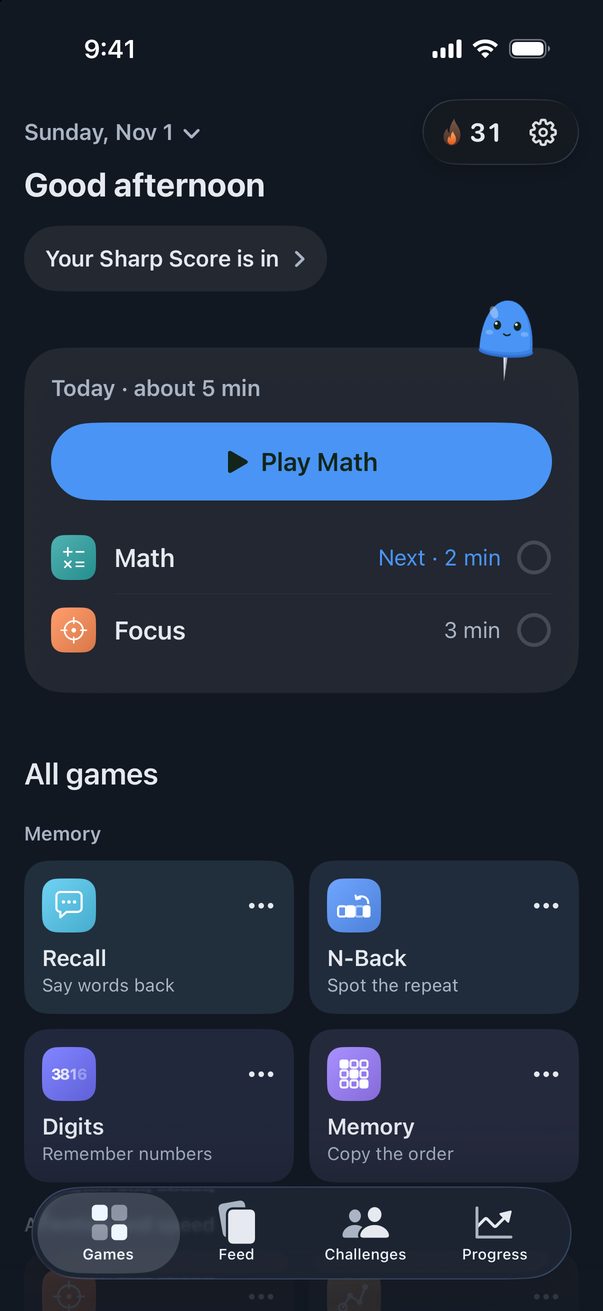

 Sharp for iPhone
Play first.
Scroll later.
Lock TikTok, Instagram, whatever you lose time to. Open one, and Sharp asks for a few minutes of quick games first. Then it's yours for the day.
Lock apps, today's challenge and playing friends stay free. All sixteen games: free for 15 days, then $2.99 a month. No account, no ads. iPhone only.
On a computer? Scan with your iPhone's camera to get Sharp.
We pick it up more than we mean to.
A few seconds at a time, all day. And it costs more than time.
186
times a day the average American picks up their phone.
Reviews.org, 2026Sharp Puts today's games between you and the apps you pick up most.
Students who cut social media to about 30 minutes a day for three weeks felt less lonely and less depressed than students who didn't.Hunt et al., Journal of Social and Clinical Psychology, 2018Sharp Your limit holds: a feed opens only after you've played.
See the research
47 seconds. That's how long attention now stays on one screen before it jumps somewhere else, down from about two and a half minutes in 2004.Gloria Mark, UC Irvine
41% of US adults say they're online almost constantly.Pew Research, 2025
About a third of the time people spend on social media is time they'd rather not have spent, driven by habit more than choice.Allcott, Gentzkow & Song, American Economic Review, 2022
People paid to quit Facebook for four weeks felt a little happier, and spent more of that time with friends and family.Allcott et al., American Economic Review, 2020
Scrolling asks nothing of you.
Sharp asks a little first.
How Sharp works
- 1
Play a few minutes a day.
One tap starts today's plan. Pick how long, from 5 minutes to 30.
- 2
Each game keeps up with you.
Harder as you get better, so you're right most of the time. Misses come back.
- 3
Watch your numbers climb.
Seconds a card, squares held, sums a minute. And a Sharp Score every Monday.
Try one now
Three of the sixteen, right here in your browser.
9:41
Focus0 cards today

Focus
Ignore what distracts. Each card is on a clock, and it gets shorter as you level up.
3.00 s · level 1
4 more right answers to level 2.
Sixteen quick games
A minute or two each. Tap one to see how it plays.
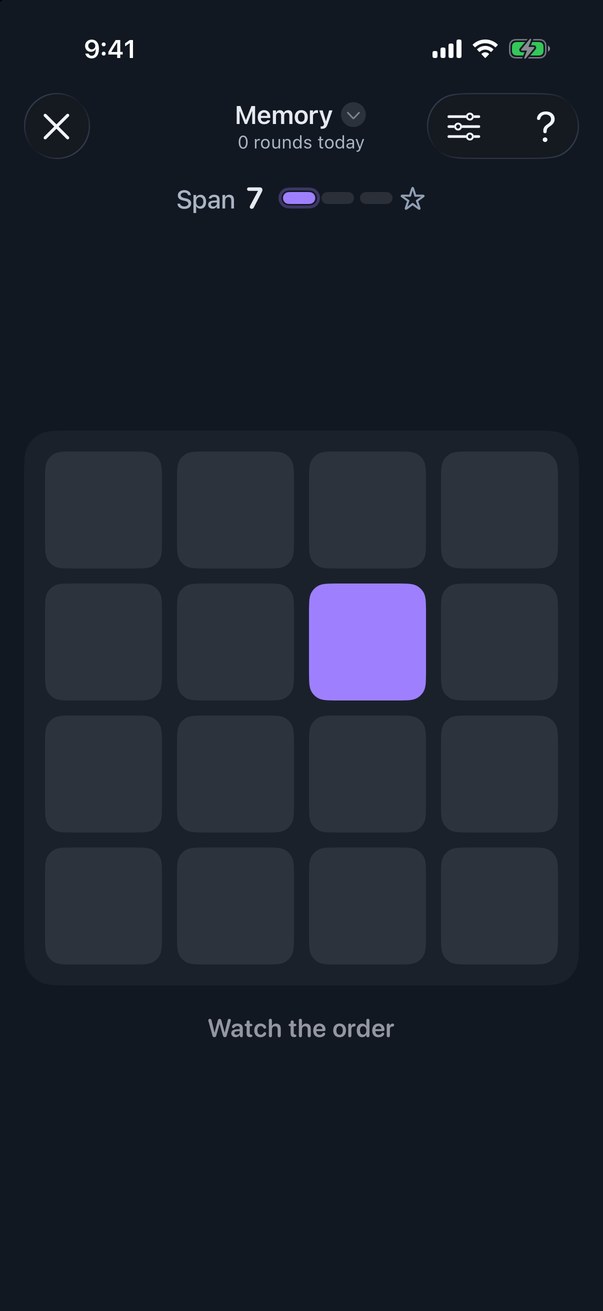
 Memory
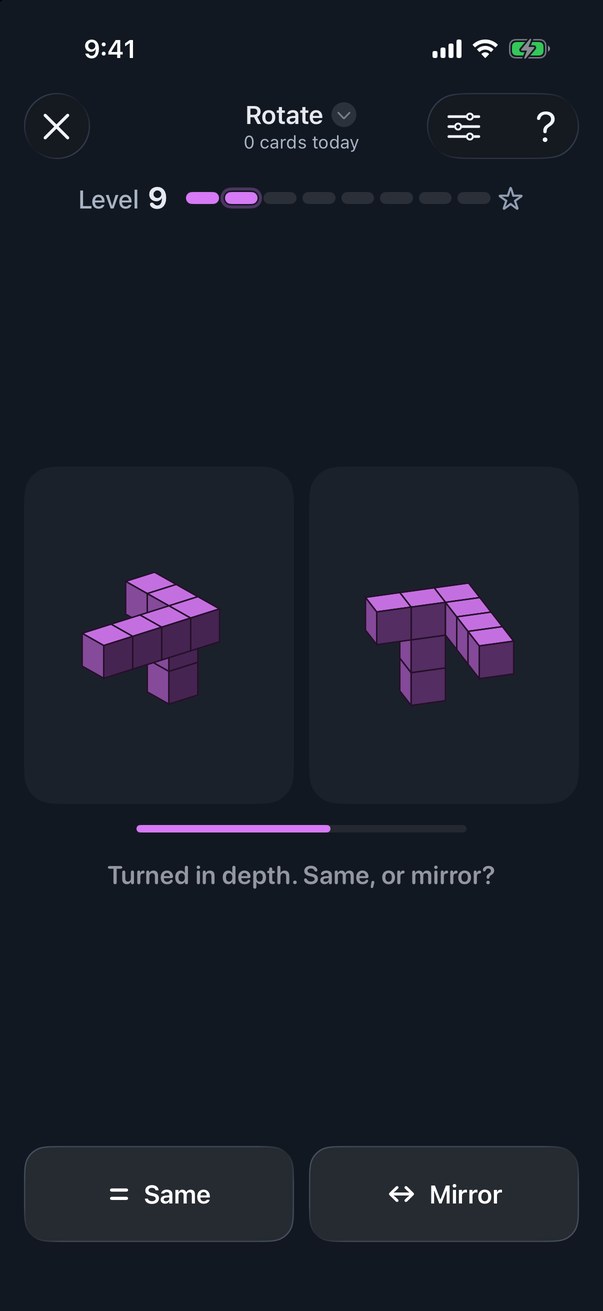
 Rotate
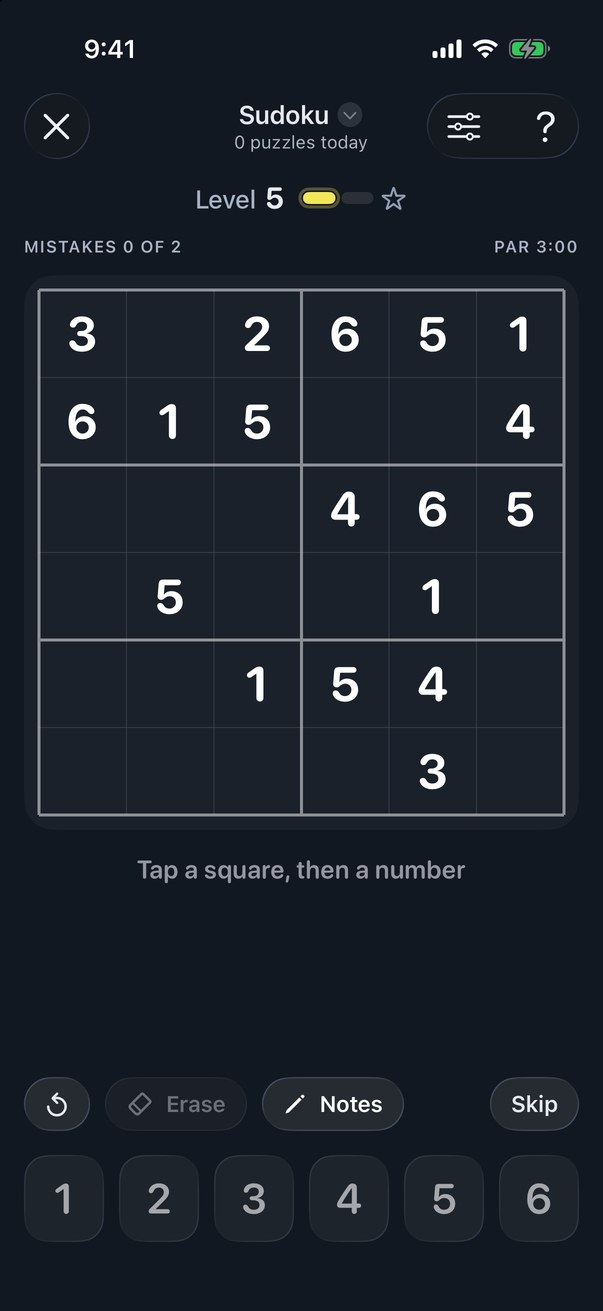
 Sudoku
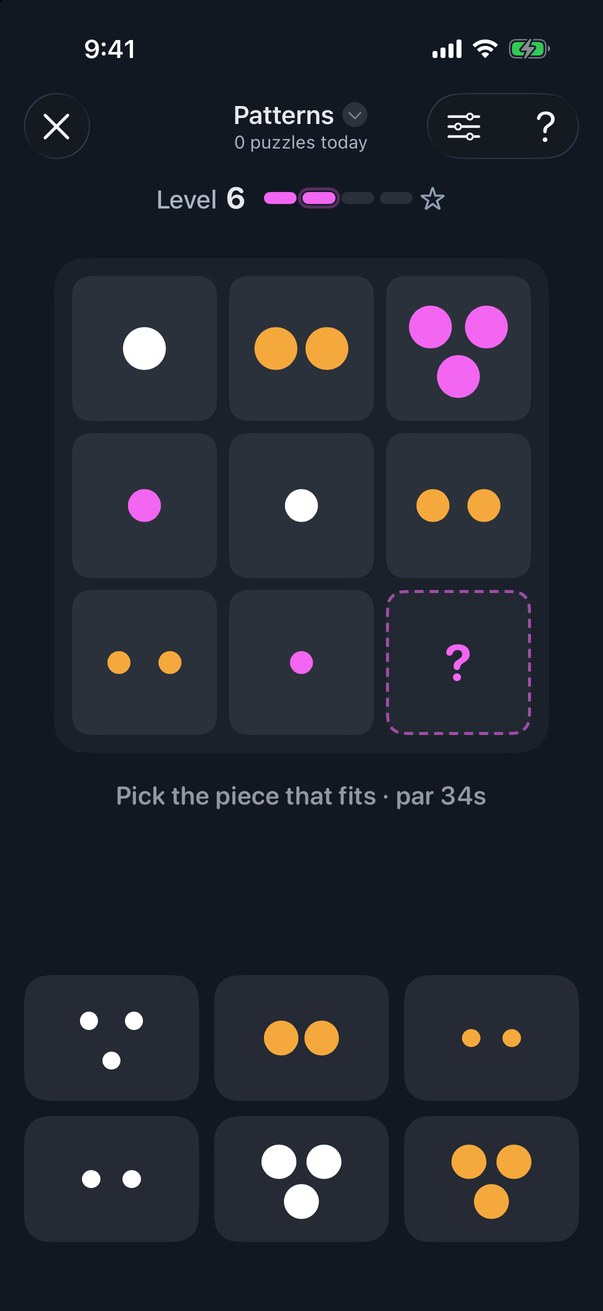
 Patterns
Memory
Focus

Speed

N-Back

Notes
Rotate

Recall

Digits

Target
Patterns

Code
Sudoku

Trails

Typing

Symbols
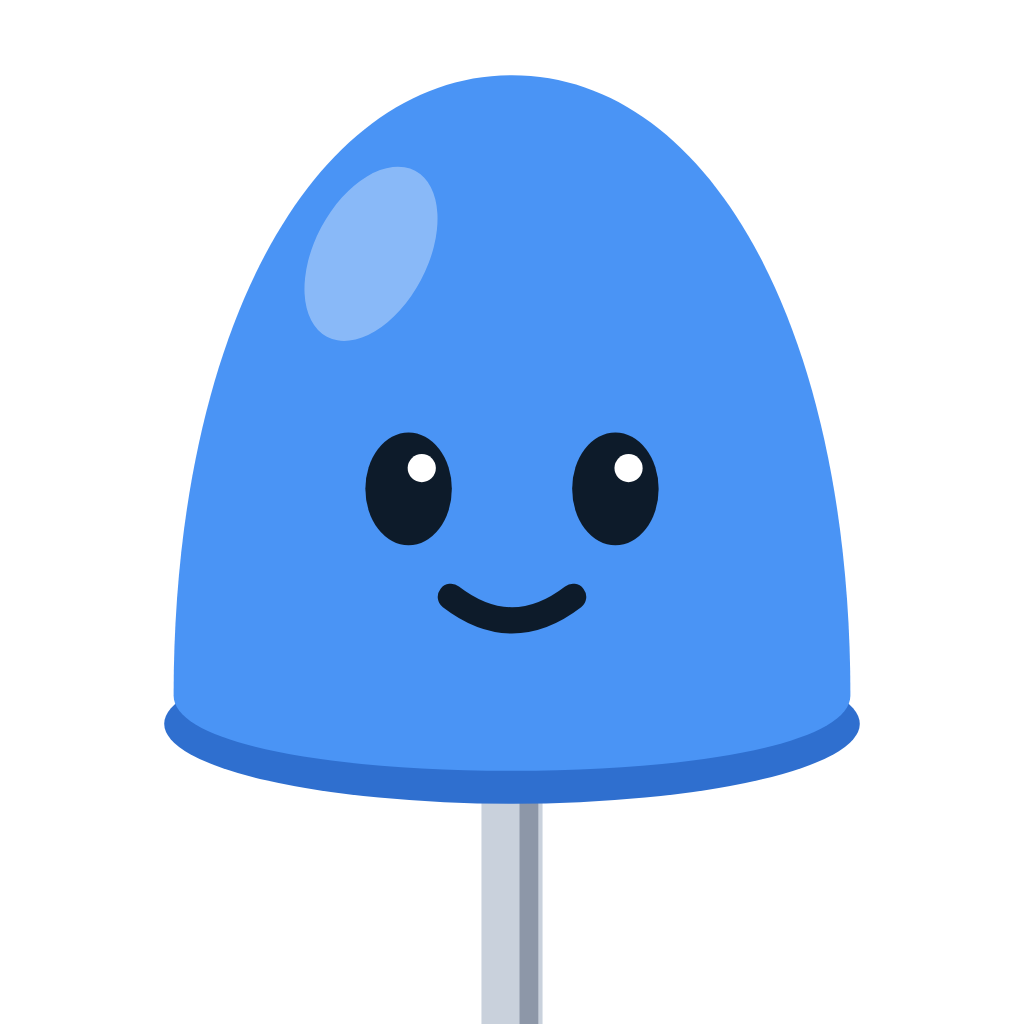
Meet Tack.
Tack is a small blue thumbtack. He peeks over your next game, pins today's plan to the apps you've locked, and cheers when you set a new best.
Make him yours.
Pick his colour and his look. Beat a bot and you win theirs, too.
Colours
Looks
Climb the mountain.
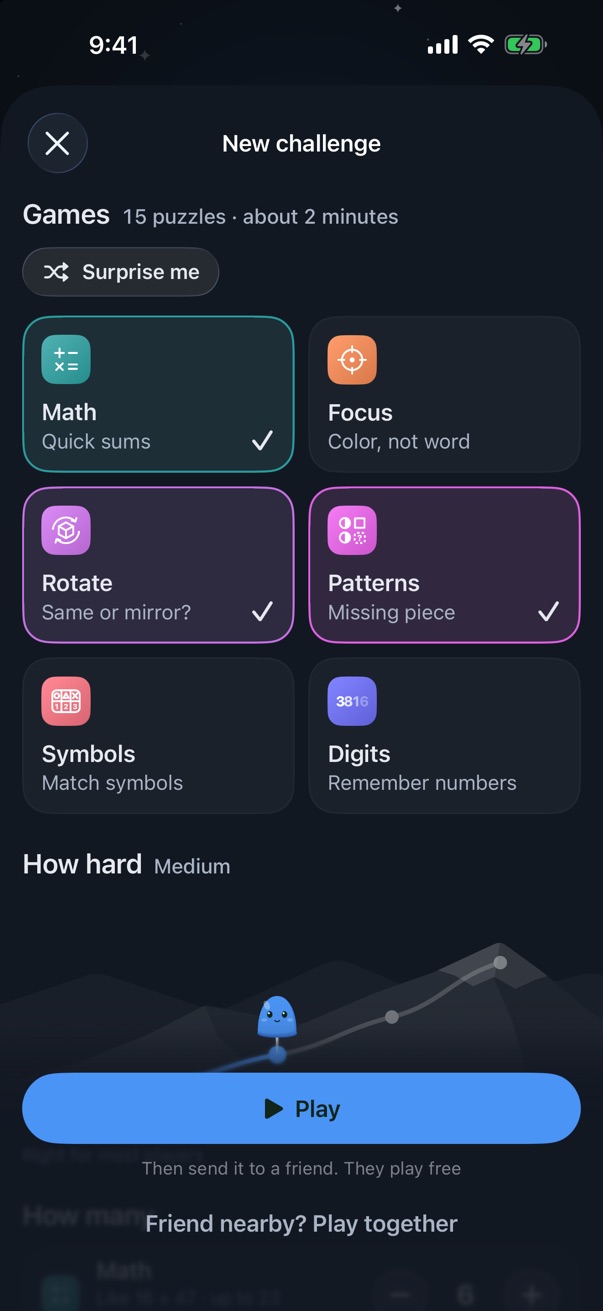
Every kind of game has its own mountain, with a bot at each stop. Race it on the same puzzles, live. Win, and you climb to the next, all the way to the top.
MemoryAttention and speedReasoningMath, music and typing
AceZipIrisMaxJuno
No miracle claims.
You'll get better at these games, and you'll see it in the numbers. Research doesn't show that makes you smarter in general, so we don't say it.
What practice does
- You get better at what you practise. A review of every study brain-training companies cited found plenty of evidence for gains on the trained tasks.1
- Gains reach similar tasks. Working-memory training improves other, untrained memory tasks of the same kind.2
- Spatial skills grow, and last. Practice at things like mental rotation helps, keeps helping, and carries to similar spatial tasks.3
- Testing yourself, spaced out, works best. Of ten study techniques, practice tests and spreading practice over time were the two rated most useful.4
What Sharp won't claim
- Make you smarter in general. There's little evidence that trained-task gains reach everyday thinking.1
- Carry over to reading, sums or reasoning. Memory training showed no reliable gains on those.2
- Back up big promises. In 2016 the FTC settled with a major brain-training company over ads claiming help at work, at school and against decline.5
- Escape what you expect. People told a game would make them smarter scored higher afterwards; people recruited neutrally didn't.6
Sources
- Simons et al., “Do ‘brain-training’ programs work?”, Psychological Science in the Public Interest, 2016
- Melby-Lervåg, Redick & Hulme, Perspectives on Psychological Science, 2016 (87 studies)
- Uttal et al., Psychological Bulletin, 2013 (217 studies)
- Dunlosky et al., Psychological Science in the Public Interest, 2013
- US Federal Trade Commission, press release, January 2016
- Foroughi et al., PNAS, 2016, as reported by STAT
Is Sharp free?
Yes. Free to download, and everything's yours for 15 days. After that, it's $2.99 a month only if you want to keep all sixteen games.
Free
$0
Everything for your first 15 days, then always:
- Today's challenge, and challenges with friends
- The bots
- Lock apps, opening once you've played today's challenge
- No account, no ads
Download free on the App Store
Scan with
your iPhone
your iPhone
If you want all sixteen
$2.99 a month
Only after your 15 days, and only if you choose
- All sixteen games, every day
- Your Sharp Score and progress
- Cancel any time in your App Store settings
- Works with Family Sharing
iPhone only. Not on Android or iPad yet.
Questions
What's free after 15 days?
Today's challenge, challenges with friends, the bots and Lock apps, which opens your apps once you've played today's challenge. $2.99 a month keeps all sixteen games, and you can cancel any time.
Isn't this just more screen time?
A little. But it's a few minutes that ask something of you, on games that end, in place of a feed that doesn't. Then you're done, and the feed is there if you still want it.
Can Sharp see which apps I lock?
No. Apple's Screen Time hides them from Sharp. Sharp collects no data. Privacy
What if I need an app right now?
Use a skip: three a week, each opening your apps for 10 minutes. Calls and Messages never lock, and locking is optional.
Android or iPad?
Not yet. Sharp is for iPhone for now.